

Introduction
Building a luxury home in the scenic foothills and mountainous edges of Denver means more than capturing stunning views—it means designing with nature’s challenges in mind. One of the most pressing considerations for high-end homeowners in this region is wildfire risk. As fire seasons grow longer and more intense, Denver’s building codes have adapted to promote resilience and safety, especially in Wildland-Urban Interface (WUI) zones.
For those investing in custom luxury homes, wildfire mitigation isn’t about compromise—it’s about intelligent design. The best homes today don’t just meet the codes. They integrate fire-resistance in ways that preserve beauty, performance, and peace of mind.
If you’re planning to build in Denver’s fire-prone zones, here’s how to align cutting-edge architecture with modern safety standards.
Why Wildfire Mitigation Matters for Luxury Homes
While the threat of wildfires once seemed remote, recent years have shown how quickly flames can reach residential areas—even affluent, well-maintained neighborhoods. Denver’s foothill properties are especially vulnerable due to dry vegetation, high winds, and limited evacuation routes.
Luxury homes represent more than financial investment—they carry emotional value, custom craftsmanship, and often irreplaceable materials. That’s why wildfire resilience is a top priority in modern home design, especially when you’re building from the ground up.
Incorporating Denver’s wildfire mitigation codes from the start protects not only your home but also the safety of your family and surrounding community.
Understanding Denver’s WUI Code Requirements
In 2020, Denver adopted revised building codes focused on wildfire risk in the Wildland-Urban Interface. These codes require specific construction standards in designated risk zones and apply to materials, defensible space, and overall building practices.
Key requirements include:
- Non-combustible or ignition-resistant siding and roofing materials
- Tempered glass windows with ember resistance
- Covered vent openings with mesh screening
- Defensible space and vegetation management around the home
- Enclosed soffits and eaves to prevent ember intrusion
At Infineum Builders, we integrate these code requirements into the earliest design phases, ensuring compliance without compromising on luxury aesthetics or architectural integrity.
Material Choices That Meet Code and Enhance Design
Luxury homes often showcase natural materials, clean lines, and textural contrasts—but these don’t have to clash with fire-resistance. In fact, many code-compliant materials are beautiful, sustainable, and high-performing.
Roofing That Withstands Ember Storms
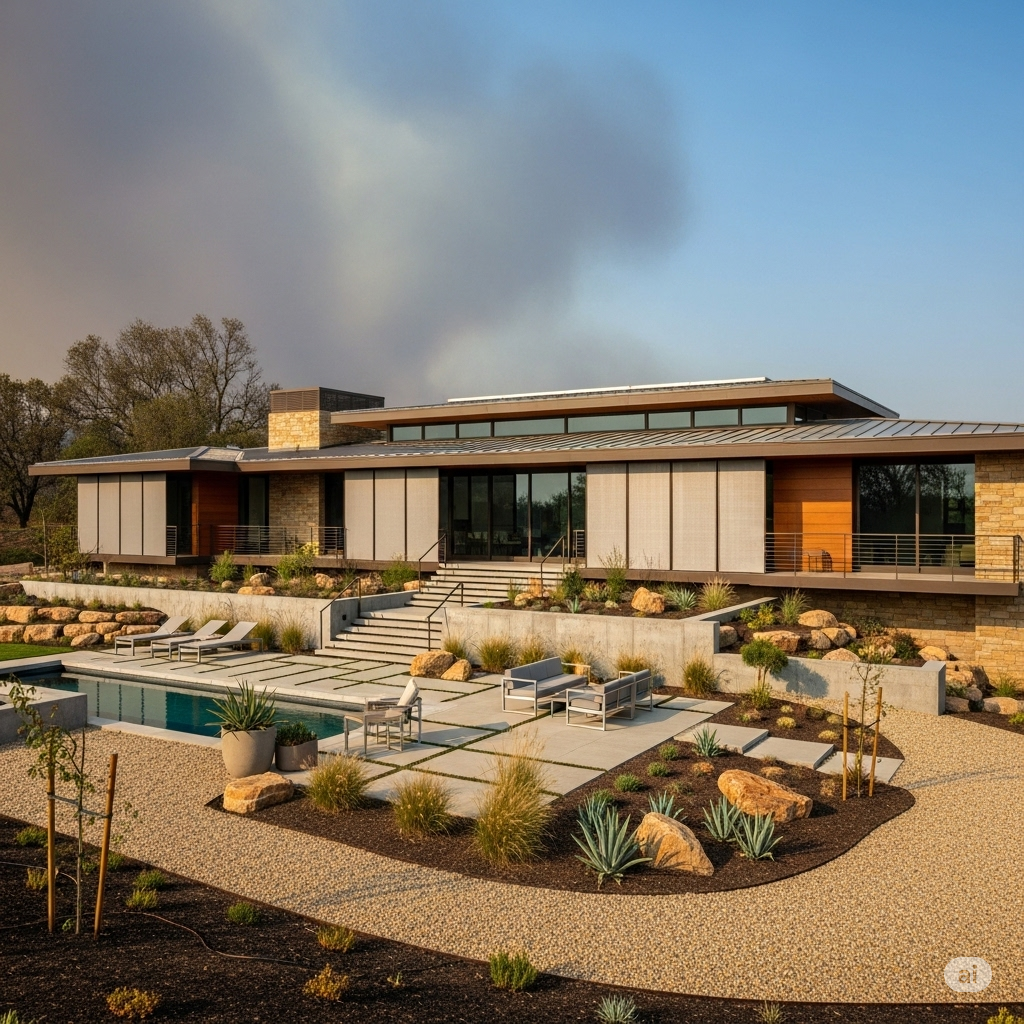
Metal roofs are a standout choice for fire-prone areas. Not only are they non-combustible, but they also offer a sleek, modern appearance that pairs well with contemporary or mountain-modern homes. Tile and concrete shingles also meet WUI codes and add architectural weight and texture to your roofline.
We advise avoiding untreated wood shake shingles altogether, as they are highly flammable and no longer code-compliant in WUI zones.
Siding That Combines Durability and Style
Fiber cement siding, treated wood alternatives, and stucco are all approved under Denver’s wildfire code and available in various finishes. These materials can mimic natural wood grains or stone textures while providing a barrier to flame spread. Paired with color-consistent fire-retardant coatings, they elevate curb appeal while securing your investment.
Windows and Vents That Seal Out Danger
Large windows are a hallmark of luxury homes, especially in scenic Denver settings. To protect these visual assets, wildfire codes require double- or triple-paned tempered glass, which resists breakage during extreme heat. For optimal design, we use window systems that combine wide viewing angles with embedded ember shields and smart glazing.
Vents, meanwhile, must be screened with 1/8-inch mesh to block ember entry. These subtle modifications go unnoticed to the eye—but make all the difference in a wildfire scenario.
Defensible Space as a Landscape Feature
One of the most significant code updates in recent years involves creating defensible space—the buffer zone between your home and surrounding vegetation. But rather than seeing this as a design limitation, we treat it as a creative opportunity.
Tiered hardscaping, fire-resistant native plants, and smart irrigation systems can turn code-mandated clearance into a serene outdoor living area. Gravel paths, stone walls, and metal planters all double as fire breaks. With the right landscape design, you can enjoy lush, green surroundings that protect your home instead of endangering it.
Our team works closely with landscape architects to balance beauty and safety while staying fully compliant with Denver’s evolving wildfire mitigation ordinances.
Architectural Design That Naturally Resists Fire
It’s not just about materials—it’s about form. The shape and structure of your home play a vital role in fire resilience.
Minimize Ember Catch Points
Complex rooflines and exposed overhangs create vulnerabilities where embers can accumulate. Instead, consider streamlined roof profiles, boxed-in eaves, and enclosed underdecks. These changes create cleaner silhouettes while reducing entry points for flames or windborne embers.
Positioning the Home on the Lot
Strategic site placement can naturally shield your home from prevailing fire pathways. Whenever possible, we situate homes away from steep slopes (which can intensify fire behavior) and use natural land contours to create safer setbacks. Retaining walls, berms, and driveway layouts can all assist in fire direction control.
By designing with the landscape instead of against it, we create homes that are as safe as they are striking.
Planning for Insurance and Long-Term Protection
Luxury homes in WUI zones often face higher insurance premiums—or difficulty securing coverage altogether. By incorporating all applicable wildfire mitigation strategies and exceeding code when possible, homeowners can improve their insurability and reduce long-term costs.
Documenting mitigation efforts during construction—such as fire-resistant materials, smart irrigation, and defensible space planning—helps provide proof to insurers of your home’s fire readiness.
It’s also wise to build in long-term maintenance strategies: fire-retardant repainting schedules, routine landscape thinning, and seasonal inspections of vents and gutters.
Conclusion: Build the Home of Your Dreams—Without Sacrificing Safety
Designing a luxury home in Denver’s most breathtaking regions comes with the responsibility to build smart, secure, and sustainable. Incorporating wildfire mitigation isn’t just about following the code—it’s about building with foresight, care, and respect for Colorado’s natural beauty.
At Infineum Builders, we don’t believe in trade-offs between elegance and safety. Our approach to wildfire-conscious design seamlessly blends architectural excellence with code compliance and environmental strategy. From the first blueprint to final landscaping, we ensure your home is prepared to withstand the unexpected—without losing the warmth, character, and individuality that defines luxury living.
Ready to design a luxury home that stands strong in every season? Contact Infineum Builders today to begin your journey. Let’s build something beautiful—and unshakably secure.